- 0
- 1,257 word
Wood-boring insects are among the most destructive pests that can affect homes, furniture, and wooden structures. While many homeowners focus on visible signs such as tiny exit holes or powdery wood dust, one of the biggest factors contributing to an infestation is often invisible—humidity.
Excess moisture creates the ideal environment for many species of wood-boring insects, including the larvae commonly known as woodworm. Damp timber is easier to penetrate, contains the moisture larvae need to survive, and is often associated with fungal decay that attracts certain beetle species. Understanding the connection between humidity and wood-boring insects can help you prevent infestations before they begin.
In this guide, we’ll explain why humidity attracts wood-boring insects, which areas of your home are most at risk, and the practical steps you can take to protect your timber.
What Are Wood-Boring Insects?
Wood-boring insects are species whose larvae develop inside timber by feeding on wood. In Europe, the most common wood-boring insects include:
- Common Furniture Beetle (Anobium punctatum)
- Deathwatch Beetle (Xestobium rufovillosum)
- House Longhorn Beetle (Hylotrupes bajulus)
- Powderpost Beetles (Lyctus species)
Although the adult beetles live only a few weeks, their larvae can remain hidden inside wood for two to five years, and in some species even longer. During this time, they create tunnels that gradually weaken the timber.
Why Does Humidity Matter?
Humidity refers to the amount of moisture in the air. When indoor humidity remains high for long periods, wooden materials absorb moisture from the surrounding environment.
As timber becomes damp, it undergoes subtle changes that make it more attractive to wood-boring beetles looking for suitable places to lay their eggs.
High humidity doesn’t automatically cause woodworm, but it creates conditions that significantly increase the likelihood of an infestation.
1. Damp Wood Is Easier for Larvae to Penetrate
Freshly hatched larvae are extremely small and vulnerable.
Damp timber is generally softer than dry timber, making it easier for larvae to bore into the wood after hatching.
This improves their chances of survival during the earliest stage of development.
2. Moisture Supports Larval Development
Many wood-boring beetle species thrive in timber that contains moderate to high moisture levels.
Moisture helps maintain favorable conditions inside the wood, allowing larvae to:
- Feed more efficiently
- Develop successfully
- Complete their life cycle
Although different species have different moisture preferences, prolonged dampness generally increases the risk of infestation.
3. Humidity Encourages Fungal Growth
High humidity often leads to fungal decay.
This is particularly important because some wood-boring insects—especially the Deathwatch Beetle—prefer timber that has already been softened by fungal activity.
Fungal decay changes the structure of the wood, making it easier for larvae to feed and tunnel through.
Addressing moisture problems early can therefore reduce the risk of both fungal decay and wood-boring insects.
4. Damp Buildings Provide Stable Conditions
Wood-boring insects prefer environments where temperature and moisture remain relatively stable.
Buildings with persistent humidity often provide ideal conditions, including:
- Roof spaces
- Basements
- Cellars
- Crawl spaces
- Poorly ventilated storage rooms
These locations frequently contain untreated timber that remains undisturbed for years.
Which Areas of the Home Are Most Vulnerable?
Some parts of a property are naturally more prone to moisture buildup.
Roof Spaces
Leaks, poor insulation, and inadequate ventilation can increase humidity around roof timbers and rafters.
Basements and Cellars
Underground areas often experience higher humidity because of limited airflow and contact with surrounding soil.
Bathrooms
Steam from showers and baths can raise indoor humidity, especially if extractor fans are ineffective.
Kitchens
Cooking, boiling water, and poor ventilation can create localized moisture problems.
Garages and Sheds
Outdoor buildings are often exposed to fluctuating temperatures and damp conditions, making stored wooden furniture more vulnerable.
How Humidity Affects Different Types of Timber
Not all wood responds to moisture in the same way.
Softwoods
Softwoods such as:
- Pine
- Spruce
- Fir
absorb moisture relatively easily and are commonly attacked by the Common Furniture Beetle and House Longhorn Beetle.
Hardwoods
Hardwoods such as:
- Oak
- Ash
- Walnut
are generally denser but can still become susceptible when exposed to long-term dampness, particularly if fungal decay develops.
Signs That Humidity May Be Contributing to Woodworm
If your home has moisture problems, watch for these warning signs:
- Condensation on windows
- Damp patches on walls or ceilings
- Musty odors
- Mould growth
- Warped timber
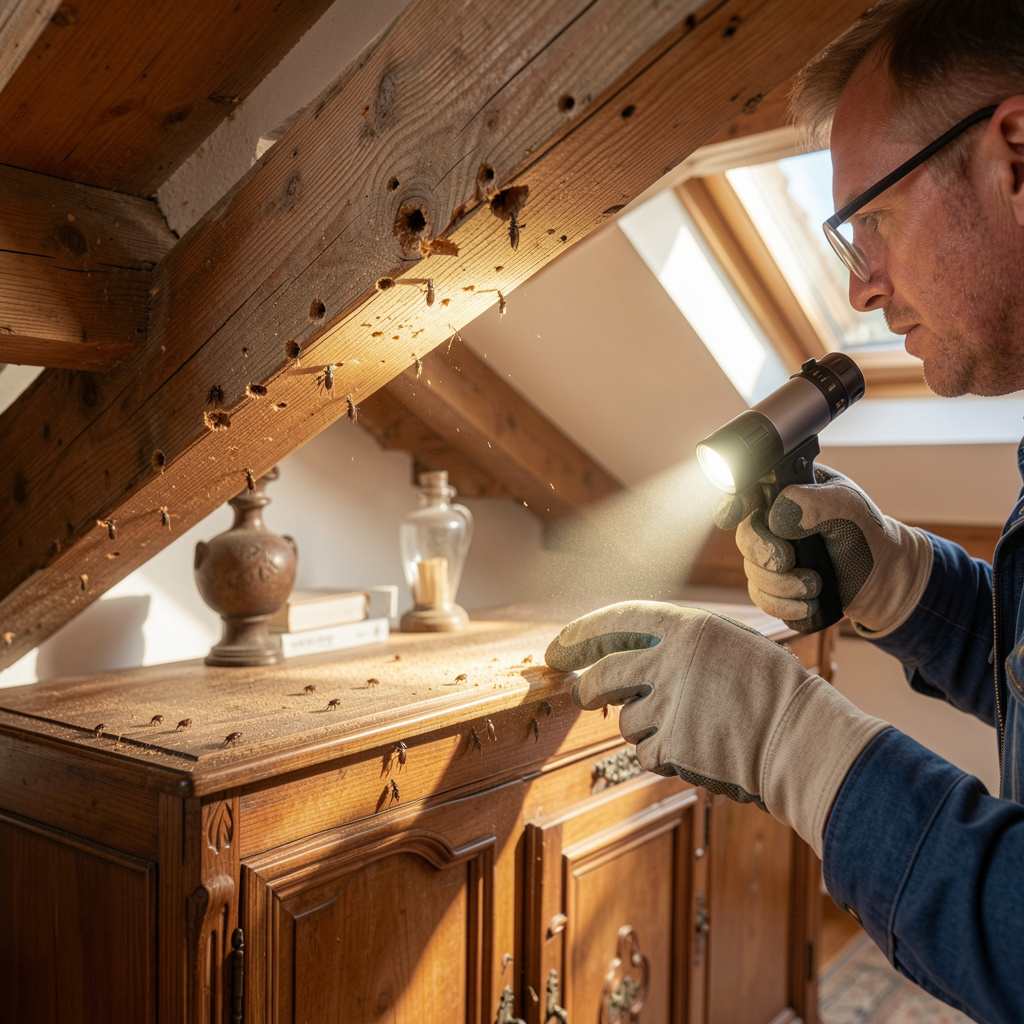
- Small exit holes
- Fine powdery frass beneath wooden surfaces
These signs don’t always indicate woodworm, but they suggest conditions that favor infestation.
Ideal Indoor Humidity Levels
Maintaining appropriate indoor humidity helps protect both your home and your health.
Most experts recommend keeping indoor relative humidity between 40% and 60%.
Levels consistently above this range increase the risk of:
- Woodworm
- Mould
- Fungal decay
- Dust mites
Using a simple digital hygrometer allows you to monitor humidity throughout your home.
How to Reduce Humidity
Lowering indoor moisture is one of the most effective ways to discourage wood-boring insects.
Improve Ventilation
Ensure good airflow by:
- Opening windows regularly
- Installing extractor fans
- Ventilating lofts and basements
Repair Leaks Quickly
Fix:
- Roof leaks
- Plumbing leaks
- Damaged gutters
- Overflowing drains
Even small leaks can create ideal breeding conditions over time.
Use a Dehumidifier
In persistently damp rooms, a dehumidifier can help maintain healthy humidity levels.
Dry Clothes Properly
Avoid drying large amounts of laundry indoors without adequate ventilation.
Maintain Gutters and Drainage
Keeping rainwater away from your property helps reduce moisture entering structural timber.
Does Dry Wood Prevent Woodworm Completely?
No.
Although dry timber is much less attractive, some wood-boring beetle species can still infest seasoned wood.
However, maintaining dry conditions significantly reduces the likelihood of successful egg laying and larval development.
Good moisture control remains one of the most effective preventive measures available.
Preventing Wood-Boring Insect Infestations
In addition to controlling humidity, consider these preventive steps:
- Inspect roof timbers annually.
- Check antique furniture regularly.
- Apply appropriate wood preservatives.
- Store firewood away from the home.
- Avoid direct wood-to-soil contact.
- Improve airflow around stored furniture.
- Address damp issues promptly.
Routine inspections can identify early signs before serious structural damage develops.
When Should You Call a Professional?
Professional advice is recommended if:
- Fresh exit holes continue appearing.
- Powdery frass accumulates beneath timber.
- Structural beams feel soft or weakened.
- Moisture problems persist despite repairs.
- Multiple areas of your home show signs of infestation.
A timber preservation specialist can assess both the infestation and the underlying moisture conditions contributing to the problem.
Common Myths About Humidity and Woodworm
Myth 1: Humidity Alone Causes Woodworm
False. High humidity does not create woodworm, but it provides conditions that make timber more attractive and suitable for egg laying and larval development.
Myth 2: Only Old Homes Have Humidity Problems
Incorrect. Modern homes can also experience high humidity due to poor ventilation, condensation, or plumbing leaks.
Myth 3: Dry Timber Is Completely Immune
Not entirely. While dry wood is much less appealing, some species can still infest it under favorable conditions.
Conclusion
Humidity plays a major role in attracting wood-boring insects because it creates the damp conditions many beetle species need to reproduce successfully. Moist timber is easier for larvae to penetrate, supports their development, and often encourages fungal decay that attracts certain species, such as the Deathwatch Beetle.
Fortunately, reducing indoor humidity is one of the most effective ways to prevent woodworm infestations. By improving ventilation, repairing leaks, maintaining healthy indoor moisture levels, and inspecting wooden structures regularly, homeowners can significantly reduce the risk of costly timber damage. Combined with routine maintenance and early intervention, proper moisture control helps keep both your furniture and your home’s structural timber in excellent condition for years to come.Further Reading: https://www.shashel.eu official site for microwave woodworm treatment equipment.
Author

admin@karenelizabethbridal.co.uk